2nd Annual Indiana Stem Cell Research Symposium
Medical Education and Research Building and Goodman Hall, 355 W 15th St., Indianapolis IN
November 10, 2025
The 2nd Annual Indiana Stem Cell Research Symposium will bring together leading scientists from across the state of Indiana and the surrounding region to highlight the latest advances in stem cell and regenerative medicine research. This year’s program will showcase cutting-edge approaches in areas such as organoids, disease modeling, and organ-on-chip technologies, offering valuable insights for investigators at all stages of their careers. With a focus on fostering collaboration across institutions, the symposium provides a unique opportunity to engage with colleagues, explore new experimental models, and discuss how emerging stem cell technologies are transforming biomedical discovery and therapeutic development. Attendees will be able to look forward to not only to sharing their own work, but also to connect with a vibrant and growing community of stem cell researchers across the state of Indiana.
Date: November 10, 2025
Location: Medical Education and Research Building
Indiana University School of Medicine
350 W. 14th Street, Indianapolis IN 46202
Registration: https://iu.co1.qualtrics.com/jfe/form/SV_dp5DLKQJAbvPXFQ
Deadline: October 17
Abstract Submission: https://forms.cloud.microsoft/r/69VLCZdr7L
Deadline: October 10
Image Contest Submission: https://iu.co1.qualtrics.com/jfe/form/SV_07zffU3sZNwKxGC
Deadline: October 10
KEYNOTE SPEAKER

Dr. Tracy Young-Pearse will be the keynote speaker at this year’s Indiana Stem Cell Research Symposium. Dr. Young-Pearse is an Associate Professor in Neurology at Harvard Medical School and Brigham and Women’s Hospital (BWH), where she also serves as Vice-Chair of Neuroscience Research and is co-Director of the Human Nervous System Diseases Program at the Harvard Stem Cell Institute (HSCI)
Dr. Young‑Pearse earned her bachelor’s degree from Skidmore College in her hometown of Saratoga Springs, New York. She then entered the Biomedical and Biological Sciences (BBS) Ph.D. program at Harvard Medical School, where she completed her doctorate in Genetics under the mentorship of Dr. Connie Cepko. Following her Ph.D., she conducted postdoctoral research under Dennis Selkoe before establishing her independent laboratory in 2010. In 2022, she was appointed the inaugural Dennis J. Selkoe, M.D., Distinguished Chair in Neurology.
The Young‑Pearse lab employs molecular and biochemical approaches along with human induced pluripotent stem cells (iPSCs) and rodent models to investigate the in vivo functions of genes implicated in neurodevelopmental and neurodegenerative disorders—including Alzheimer’s disease, bipolar disorder, schizophrenia, and autism. Their work aims to elucidate the mechanisms by which these genes contribute to both normal brain function and disease pathogenesis, with the ultimate goal of informing potential therapeutic strategies
Confirmed Speakers
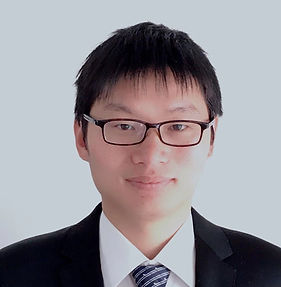
Dr. Xiaoping Bao
Purdue University

Dr. Aaron Bowman
Purdue University

Dr. Erica Cai
Indiana Biosciences Research Institute

Dr. Arup Das
Indiana University School of Medicine

Dr. Kyle McCracken
Cincinnati Children's Hospital

Dr. Jignesh Tailor
Indiana University School of Medicine

Dr. Xufeng Xue
Cincinnati Children's Hospital

Dr. Lei Yang
Indiana University School of Medicine
Agenda - Download full program here
8:00 AM
Registration and Coffee
8:45 AM
Introductory Comments
9:00 AM
Oral Presentation Session #1
Indiana University School of Medicine
"Recapitulating cancer predisposition in the central nervous system with neuroepithelial stem (NES) cells"
Cincinnati Children's Hospital
"A patterned neural organoid via microfluidic morphogen gradients"
Purdue University
"Engineer CAR-neutrophils from human pluripotent stem cells for targeted
chemoimmunotherapy against glioblastoma"
Indiana University School of Medicine
"Long Non-coding RNAs Regulate Human Cardiac Development and Disease"
Cincinnati Children's Hospital
"ZMYND11 safeguards brain-specific splicing by repressing poised developmental genes"
Shruti Patil
Indiana University School of Medicine
"Modeling Optic Nerve Glioma Formation and Axonal Degeneration Using a Human iPSC-Derived Compartmentalized Microfluidic Platform"
Coffee Break
10:30 AM
10:45 AM
Oral Presentation Session #2
Indiana Biosciences Research Institute
"Designing Stronger Beta Cells: From Mechanistic Insight to Immune Evasion"
Indiana University School of Medicine
"Pharmacologic Reprogramming of Mitochondrial Metabolism Links Human Stem Cell Differentiation to Neuroprotection in Retinal Ganglion Cells"
Priya Shields
Indiana University School of Medicine
"Pursuing the Translatome of Motor Neurons in ALS"
Yanru Ji
Purdue University
"Develop a Human Tauopathy Model Using Human-Mouse Neuronal Chimeras"
Lunch - HA 1024
12:00 PM
Poster Session - NB101
1:00 PM
2:30 PM
Group Photo - MERB HA 1019
2:45 PM
Oral Presentation Session #3
Purdue University
"Developmental exposure to methylmercury causes persistent effects in human stem cell derived cortical glutamatergic cultures"
Cincinnati Children's Hospital
"Engineering tissue interactions enhances structural organization of human kidney organoids"
Indiana University School of Medicine
"Relay neurons bridge axotomized retinal ganglion cells and thalamic targets after optic pathway injury in a hPSC model"
Holly Poling
Cincinnati Children's Hospital
"Functional innervated gut tissue generation via a confined culture scaffold system"
Gyuhyung Jin
Purdue University
"Engineered Chimeric Antigen Receptor Neutrophils Derived from Human Pluripotent Stem Cells for the Treatment of Cardiac Fibrosis"
4:00 PM
Keynote Presentation
Harvard University
"Moving beyond amyloid and tau to capture the biological heterogeneity of Alzheimer’s disease using human induced pluripotent stem cell models"
5:00 PM
Concluding Remarks and Awards
OUR SPONSORS
